
Rates are going the other way: what the September OCR rise and a flat June quarter mean for your business
Sep 24, 2026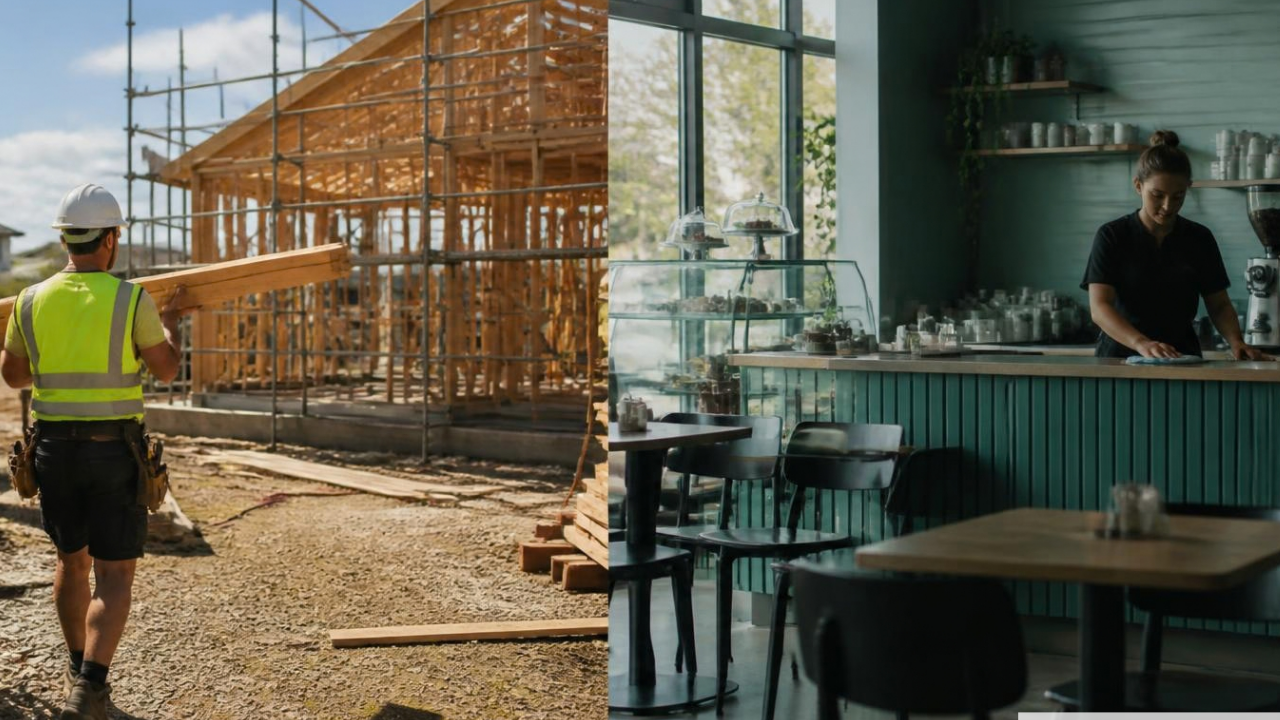
For most of the past two years, the story was that interest rates were on their way down. Plenty of businesses built their budgets around that. The story has now changed.
At the same time, the latest economic figures show a country that's growing, but only just, and where how you're doing depends a lot on what you do and where you do it. This isn't a forecast. It's a look at what the published numbers say about the conditions you're trading in right now.
Interest rates have turned
On 2 September, the Reserve Bank lifted the Official Cash Rate (OCR) to 2.75%. The OCR is the benchmark rate that feeds through into what banks charge on loans. This was the second rise in a row, following an increase to 2.50% in July.
The reason is inflation. Prices rose 4.1% in the year to June, well above the Reserve Bank's 1–3% target, largely because of fuel costs driven by the conflict in the Middle East. The Reserve Bank's own projections point to another rise before the end of the year, and its next decision is due on 28 October.
In practice, if your budget assumed interest costs would keep falling, now is the time to revisit that assumption. That applies to business loans, overdrafts, equipment finance and any lending coming up for renewal.
The economy is growing, just
The economy (measured by GDP, the total value of everything produced) grew 0.2% in the June quarter, after 0.9% in the March quarter. Over the year to June it grew 1.7%. Per person, though, growth was only 0.1%, so once you allow for population growth we're more or less treading water.
That headline hides a very split picture.
Who's busy and who's squeezed
Builders are flat out. Construction grew 2.7% in the quarter and was the biggest single contributor to growth, driven by house building and construction services.
Hospitality and retail are going backwards. Accommodation and food services fell 3.8%. Retail and accommodation combined fell 1.0%, and fuel sales dropped sharply. Stats NZ reads this as people cutting back on the extras.
Transport took the biggest hit, down 1.7%, mostly in road transport.
Exporters had a good quarter. Export volumes rose 3.3%. Meat exports jumped 10.3% on strong US demand for beef, and dairy was up 3.3%.
Households are tightening up. Household spending grew just 0.1% in the quarter, and the country's real disposable income fell 0.4%.
Where you are matters
The Reserve Bank's September statement drew a clear line between two different economies. Regions tied to exports, such as farming, food production and processing, are being supported by strong overseas demand and good export prices. Household spending is weaker, particularly in Auckland and Wellington, where flat house prices and job insecurity are weighing on people.
So a café in a big city and a café in a farming town may be having quite different years, even though they're in the same industry.
What this means for your business
If you're in the trades or construction, you're likely busy. The things to watch are cashflow, materials costs, how quickly customers are paying you, and what higher interest rates do to any equipment finance.
If you run a café, restaurant, accommodation business or shop, the national numbers back up what you may already be seeing: customers spending more carefully while your costs haven't eased.
If you export, or supply businesses that do, demand has been a tailwind. Fuel and freight costs are the drag.
If your business relies on transport, fuel remains the pressure point. It's worth checking your pricing still covers your costs.
A closer look: Hawke's Bay
Stats NZ doesn't break quarterly GDP down by region, so there's no Hawke's Bay figure for the June quarter. But the national pattern maps closely onto our economy. Food production, processing and horticulture are big here, and they sit on the side of the ledger that's benefiting from export demand. Tourism, hospitality and retail are important here too, and those are the sectors under pressure nationally. And, as everywhere, the trades are busy.
For Hawke's Bay businesses, that means the regional economy may feel steadier than the headlines suggest, but not evenly so. How your year is going will depend heavily on which side of that split you're on.
Things worth doing now
- Update your cashflow forecast using today's interest rates, not last year's.
- Know when your fixed-rate lending comes up for renewal, so it doesn't catch you by surprise.
- Keep an eye on how long customers take to pay. When customers are squeezed, payments slow down.
- If your budget was built on falling rates, it may be worth a fresh look. We're happy to help.
Sources: Stats NZ, Gross domestic product: June 2026 quarter (17 September 2026); Reserve Bank of New Zealand, Monetary Policy Statement (2 September 2026).
Stay connected.
Latest updates, news and important information for New Zealand businesses.
We will never sell your information, for any reason.